Choosing the right benchtop for your NZ kitchen
If you are comparing engineered stone benchtops in NZ, the choice is wider than it used to be. Standard engineered stone, silica-free engineered stone, sintered stone and full-bodied porcelain all compete for the same kitchen, and each suits a different budget, cooking style and look.
The short answer: choose silica-free engineered stone for a busy family kitchen that needs a tough, low-maintenance surface with a marble look. Choose sintered stone or porcelain if you cook hard and want the most heat and scratch resistance. Choose natural marble only if you are happy to seal it and let it age.
At Jerry Kitchen & Bath we design, supply and install kitchen benchtops in Auckland from our Manukau showroom, so this guide is based on the stone we actually work with.
Kitchen benchtop materials compared
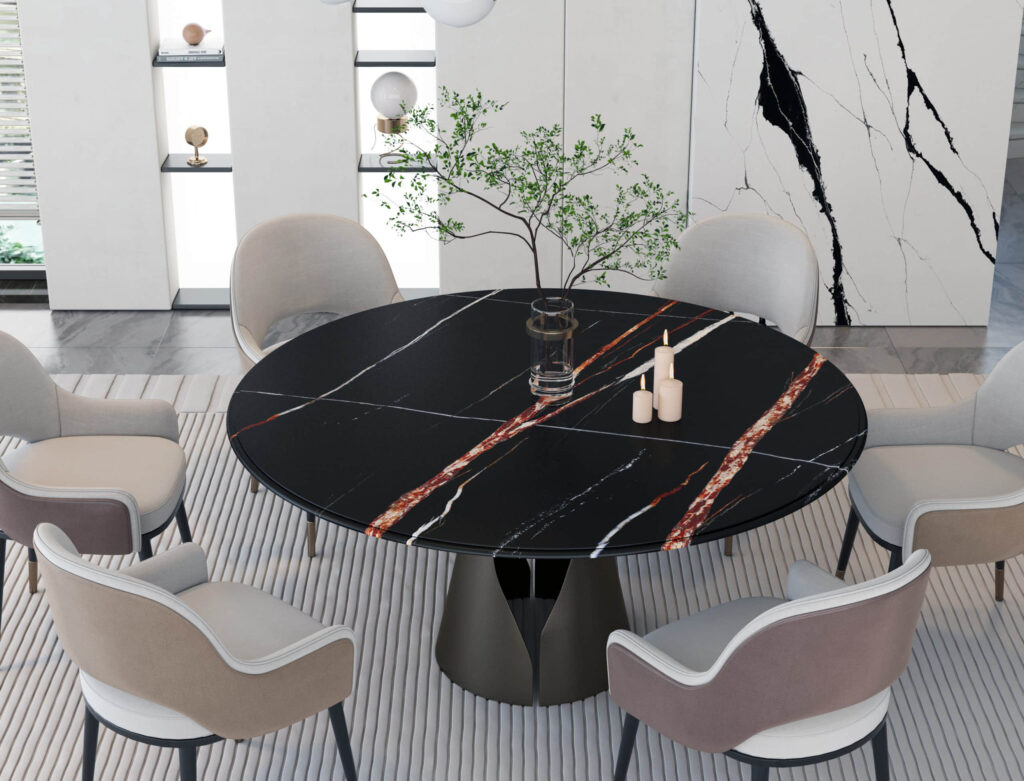
Engineered stone, sintered stone and porcelain are all non-porous and easy to clean. Natural marble is the only option here that needs regular sealing and can etch.
| Material | Heat | Scratches and stains | Upkeep | Best for |
|---|---|---|---|---|
| Engineered stone | Handles everyday heat; use a trivet for hot pans | Very good, non-porous | Mild soap and water | Busy family kitchens |
| Silica-free engineered stone | As engineered stone | As engineered stone | Mild soap and water | Marble-look kitchens where a silica-free spec matters |
| Sintered stone | Excellent | Excellent | Low | Keen cooks, full-slab splashbacks, waterfall islands |
| Full-bodied porcelain | Excellent | Excellent | Low | Modern kitchens that want a consistent pattern through the slab |
| Marble and natural stone | Good, but acids can etch the surface | Scratches and etches more easily | Periodic sealing | Buyers who love natural character and a patina |
Colour, finish and thickness options vary by slab, so confirm the details for the exact stone you are considering.
What are engineered stone benchtops?
Engineered stone benchtops are made from crushed stone bound with resin and pressed into slabs. You will also see them sold as quartz, manufactured stone, composite stone or man-made stone benchtops. In NZ these names describe the same family of products.
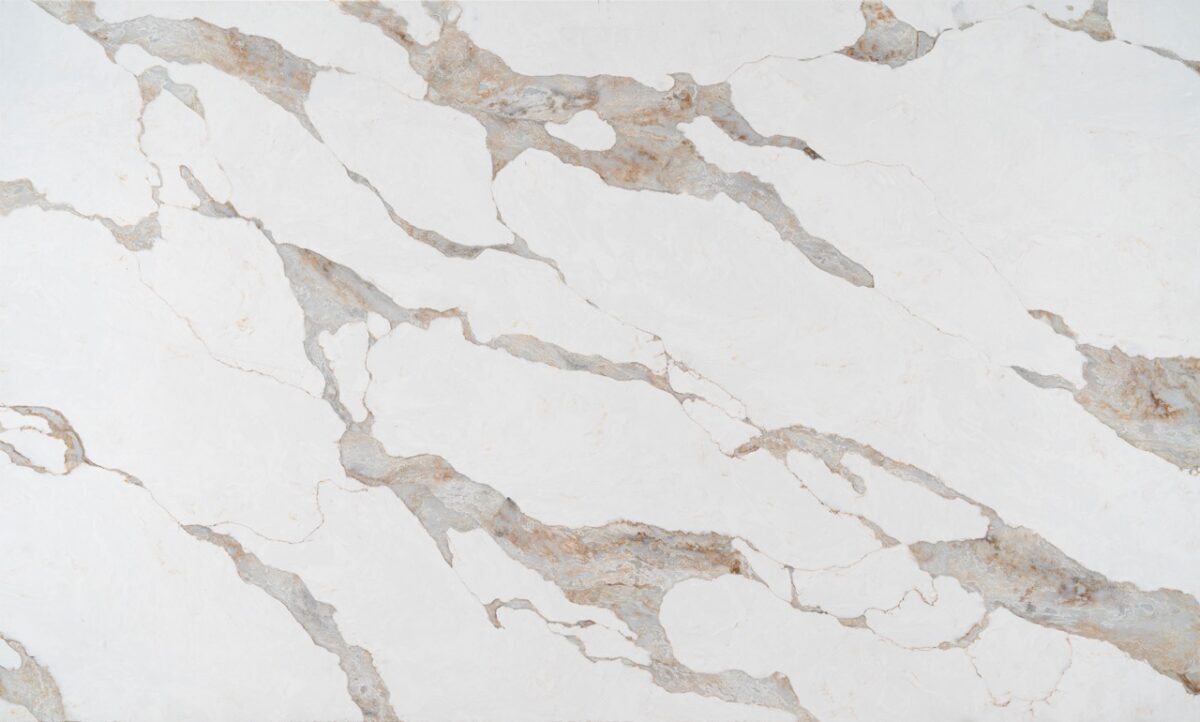
They are popular for good reason. The surface is non-porous, so it resists stains and does not need regular sealing. Colour and veining are consistent from slab to slab, so what you choose from a sample is what you get. Our Calacatta Oro SF635 slab, for example, measures 3230 × 1630 mm and comes in 20 mm or 30 mm thickness, which gives you flexibility on edge detail and island size.
The resin binder is the one thing to respect: very hot pans placed straight from the hob can mark or discolour the surface, so use a trivet.
Engineered stone and silica: what to know in NZ
Standard engineered stone can contain more than 90% crystalline silica, according to WorkSafe NZ, compared with less than 45% in natural stone such as granite. The health concern is accelerated silicosis, a serious lung disease caused by breathing in high levels of silica dust.
WorkSafe’s focus is on the people who cut, grind, drill and polish the stone, because that is when dust is released. It says people who follow its health and safety guidance for working with stone face minimal risk. In December 2024 the Government also opened a consultation on whether engineered stone needs stronger rules, with options ranging from tighter requirements to a ban. Rules can change, so check WorkSafe for the latest position.
What this means when you buy: ask your supplier for the technical data sheet showing the crystalline silica content of the exact slab, and ask how your fabricator controls dust. If you would rather avoid the question altogether, choose a crystalline silica-free slab.
Silica-free engineered stone: how it differs
Silica-free benchtops are engineered stone made without crystalline silica. You keep the colour range and easy care of engineered stone without the silica concern. Our silica-free engineered stone range leans towards marble-style veining, with slabs such as Calacatta Oro, Calacatta Luxe, Carrara Classic and Star Bianco, plus warmer tones like London Gold and Roman White Travertine.
Most slabs have a suede or honed finish, which feels softer to the touch than polished stone.
Who it suits: families, busy cooks and renovators who want a durable, non-porous surface and a silica-free specification. Our engineered stone benchtops carry a 15-year warranty.
As with any stone, ask for the data sheet for your chosen slab so you can see the supplier’s silica information for yourself.
Sintered stone benchtops: the high-heat premium option
Sintered stone benchtops are made by compressing natural minerals under intense heat and pressure, without a resin binder. The result is a surface that handles hot pans, scratches and stains better than most alternatives. Interest is climbing fast, with NZ searches for sintered stone benchtops rising sharply over the past year.
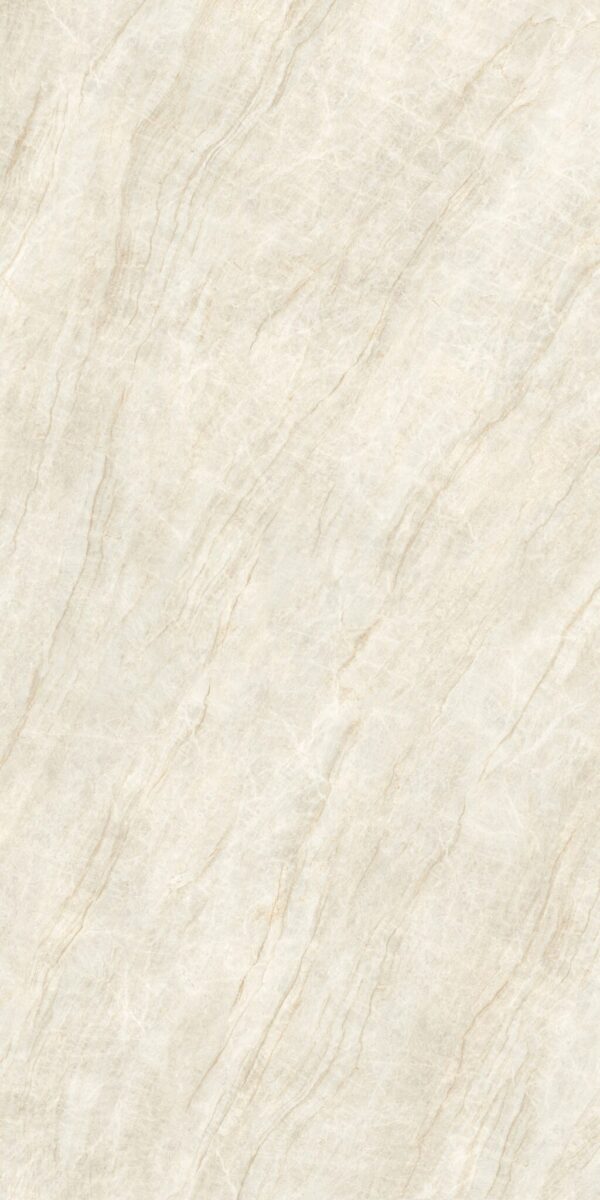
Our Taj Mahal H6348 is a good example. Sintered Stone H6348 Taj Mahal is a creamy-ivory slab with soft gold veining in a matt finish, supplied as a 3200 × 1600 mm slab that is 12 mm thick. The product page notes that it resists heat, scratches and stains, and Taj Mahal is one of the stones customers search for most.
Trade-offs to know: sintered slabs are thinner, usually sit in the mid-to-high price range, and need a fabricator experienced with thin-slab edges and cut-outs. In return you can run the same slab up the wall as a full-slab splashback or wrap it into a waterfall island for a seamless look.
Full-bodied porcelain benchtops
Full-bodied porcelain benchtops carry their colour and pattern through the full thickness of the slab, so edges, mitres and cut-outs look consistent instead of revealing a different core. Like sintered stone, porcelain is low-maintenance and stands up well to heat, scratches and stains.
Browse our full-bodied porcelain benchtops if you want a modern, uniform look for a kitchen, island or splashback. Edge options can be more limited than with engineered stone, so tell us the profile you have in mind before you commit.
Marble and natural stone benchtops
Marble benchtops in NZ remain popular for their natural veining, but marble is softer and porous. Acidic foods, wine and some cleaners can etch or stain the surface, so expect to seal it periodically and accept a patina over time. Natural stone does not carry a warranty from us, which is worth knowing before you buy.
If you love the marble look without the upkeep, a marble-style silica-free slab such as Calacatta Oro gets you close with far less maintenance.
Engineered stone benchtop colours in NZ: what to look at
White and grey lead NZ kitchens, and our silica-free range reflects it: white and grey slabs make up most of it, followed by yellow, brown and cream tones. Veined slabs are the big draw, from soft Carrara-style patterns to bold Calacatta gold veining.
Colours to start with:
- White-led: Star Bianco SF2817, Blossom White SF637, Bianco Breeze SF617
- Classic veining: Carrara Classic SF618, Calacatta Altay SF636, Calacatta Luxe SF619
- Gold and warm tones: London Gold SF626, Roman White Travertine SF631
Silica-Free Engineered Stone Calacatta Oro SF635 pairs a pure white base with dramatic grey veins and warm golden accents. It comes as a 3230 × 1630 mm slab in 20 mm or 30 mm thickness.
For finishes, most silica-free slabs are suede or honed, with a few matte or polished options. Sintered stone ranges from matt to honed to polished, so ask to see the finish in person, because it changes how the colour reads in your light.


How much do engineered stone benchtops cost in NZ?
The cost of engineered stone benchtops in NZ depends on the slab, the size of your kitchen and how the stone is fabricated, and the most accurate number comes from a free quote. These are the factors that move the price:
- The slab itself: range, colour and finish
- Thickness: 20 mm or 30 mm for engineered stone
- Edge profile, mitred edges and waterfall ends
- Cut-outs for the sink, hob and tap
- Kitchen size, island and splashback
- Installation and site access
For the whole project, Jerry Kitchen suggests budgeting around 8% of your home’s value, excluding land, for a full kitchen. Projects range from under $8,000 to well over $100,000, depending on materials and scope. Sintered stone and porcelain usually sit in the mid-to-high price range, while laminate benchtops in NZ are the budget choice but show wear sooner. Because we work directly with the manufacturer, we can offer competitive pricing on stone without compromising on quality.
Allow for lead times too. Most Auckland kitchen renovations take 6 to 12 weeks from start to finish, or 3 to 5 weeks for a simple refresh.
How to choose the best kitchen benchtop material for your lifestyle
- Busy family kitchen: silica-free engineered stone, for stain resistance and easy cleaning.
- Keen cook: sintered stone or porcelain, which give you the most headroom for hot pans.
- Entertainer with an island: a sintered or silica-free slab with waterfall ends for a seamless look.
- Selling or renting: a neutral white or grey engineered stone that suits most buyers.
- Love natural character: marble, sealed and cared for, if you accept a patina.
Before you decide, view samples in your own kitchen light, morning and evening, and ask for the slab size and thickness so your fabricator can plan seams around your layout.
Caring for your stone benchtop
- Engineered stone: clean with mild soap and water, and use trivets and chopping boards.
- Sintered stone and porcelain: wipe with a mild cleaner; they are low-maintenance and do not need sealing.
- Marble and natural stone: wipe up acidic spills quickly and reseal periodically.
Engineered stone benchtops NZ: frequently asked questions
Is engineered stone the same as quartz?
Quartz benchtops are a type of engineered stone made from crushed quartz bound with resin. In NZ, quartz, manufactured stone and composite stone are often used interchangeably for the same kind of product.
Is sintered stone better than engineered stone?
Sintered stone resists heat, scratches and stains better, but it is thinner, usually costs more and needs an experienced fabricator. Engineered stone comes in thicker 20 mm and 30 mm slabs with more edge options.
Can sintered stone handle hot pans?
Our Taj Mahal H6348 sintered stone resists heat, scratches and stains, according to its product page. Even so, using a trivet for very hot cookware is good practice on any benchtop.
What makes silica-free benchtops different?
Silica-free engineered stone is made without crystalline silica. Ask for the data sheet for your slab so you can check the silica information yourself, and see our silica-free range for colours and finishes.
How much does an engineered stone benchtop cost in NZ?
It depends on the slab, thickness, edges, cut-outs and the size of your kitchen. We offer complimentary site measurements and 3D kitchen design plans, so you get a free quote based on your actual layout.
How long is the warranty on a stone benchtop?
Our engineered and sintered stone benchtops carry a 15-year warranty. Natural stone does not carry a warranty from us.
Get a free benchtop quote in Auckland
Ready to choose? Book a free consultation and we will measure your space, talk you through silica-free, sintered and porcelain options, and prepare a free quote with a 3D design. You can also drop into our showroom at 71 Plunket Avenue, Manukau, Monday to Saturday, 8:30am to 5:00pm, or call +64 (9) 218 9928.